Your nose gets oily faster than the rest of your face because it has more oil glands packed into less skin — that's anatomy, not a hygiene failure. Fix the routine, not the shame.
- An oily nose by midday comes from sebaceous gland density, not dirty skin — over-washing makes it worse.
- Two cleanses a day, lukewarm water, and an oil-free zinc face gel is the baseline fix for 2026.
- Blotting paper is a stopgap, not a solution — it removes oil but does nothing about the gland producing it.
- If your nose is oily but your cheeks are dry, you have combination skin, not oily skin — treat them differently.
Why this matters
The nose sits in the T-zone, where sebaceous glands are denser and larger than anywhere else on the face. That's a structural fact, not a verdict on how well you take care of yourself. The problem most men create is trying to fix a gland with a scrub — washing three or four times a day, using a bar of hand soap because it's already in the shower, or reaching for the driest gel in the drugstore aisle.
Strip the skin's surface oil too hard and too often, and the skin reads it as a shortage. It compensates by producing more. That's why the guy who washes his face five times a day is often shinier by 2pm than the guy who washes twice. An oil-free zinc face gel works because it manages oil without stripping the barrier that tells your skin to stop overproducing.
This isn't about eliminating oil. Sebum protects and waterproofs skin — you need some of it. The goal for 2026 is regulating output, not shutting it off.
What you'll need
- A gentle, low-foam cleanser (not bar soap, not a scrub)
- An oil-regulating gel or lotion labeled oil-free or non-comedogenic
- Blotting papers or a clean cotton cloth, kept in a bag or desk drawer
- Lukewarm water — not hot
- 90 seconds, twice a day
- Patience through week one, when oil output can temporarily spike as skin recalibrates
The steps
1. Cut down to two washes a day
Morning and night. That's it. Every extra wash strips more surface lipid, and the skin overcorrects by the next morning. If you're washing after the gym too, that's fine — count it as one of your two, and skip the evening wash instead of stacking a third.
Expected outcome: less rebound shine by hour six or seven. Common mistake: washing every time the nose looks shiny during the day. That resets the cycle instead of breaking it.
2. Switch to lukewarm water, not hot
Hot water feels like it's degreasing skin, but it also breaks down the lipid barrier faster than cool or lukewarm water does. A weaker barrier means faster water loss, which again reads to your skin as "produce more oil."
Expected outcome: less tightness right after washing, less shine within a few hours. Common mistake: finishing a hot shower with a hot-water face rinse out of habit.
3. Use a cleanser built for oily and combination skin, not a bar
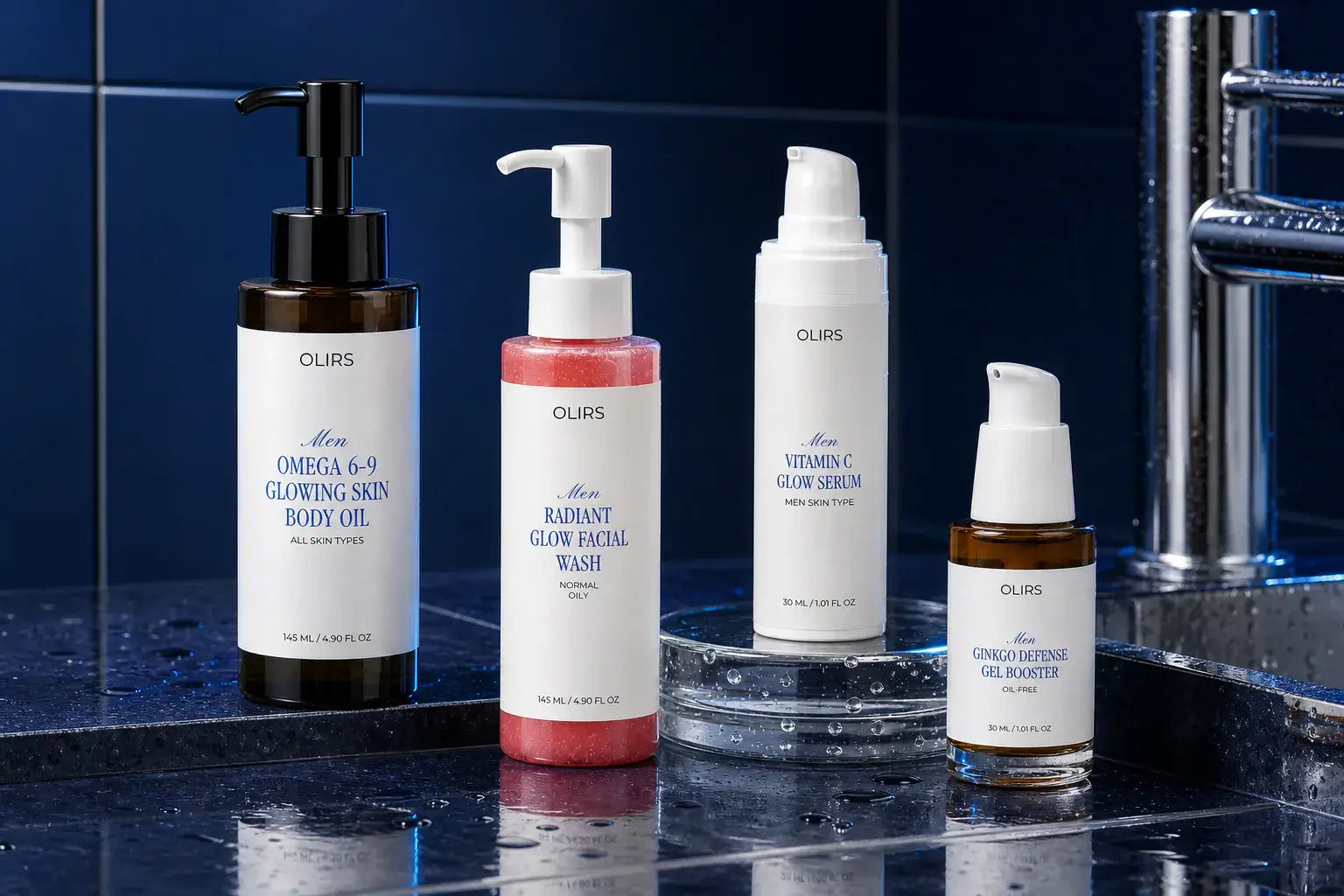
Bar soap sits on the alkaline end of the pH scale, well above skin's natural 4.5–5.5 range. That mismatch is part of why a bar soap face wash leaves skin tight for twenty minutes and shiny two hours later. A face wash formulated for oil control, like the radiant glow facial wash, targets the T-zone without pushing skin that far off its normal pH.
Expected outcome: cleaner-feeling skin without the tight, stretched sensation. Common mistake: using the same bar you use on your body, on your face, because it's already in your hand.
4. Apply an oil-free gel moisturizer, even on an oily nose
Skipping moisturizer on an oily area is the single most common mistake in this routine. Dehydrated skin still produces oil — it just also loses water, which makes the shine look worse and the texture look rougher. A lightweight, oil-free gel hydrates without adding the occlusive weight of a cream.
Expected outcome: less midday shine because skin isn't compensating for water loss. Common mistake: treating "oily" and "hydrated" as opposites. They're not related the way most men assume.
5. Add a targeted gel for the T-zone only
You don't need to treat your whole face like it's oily if only your nose and forehead are. A clarifying gel applied just to the T-zone after your regular moisturizer lets you treat the actual problem area without over-drying your cheeks and jawline.
Expected outcome: more even shine control across the whole face, not just the center panel. Common mistake: applying a strong oil-control product across the entire face when only the nose needs it.
6. Keep blotting paper as a midday tool, not a fix
Blotting paper lifts surface oil in about ten seconds and doesn't disturb sunscreen or the rest of your routine. Use it once, mid-afternoon, if the routine above hasn't fully caught up yet — which is normal in the first two to three weeks.
Expected outcome: a temporary reset that buys you a few hours. Common mistake: rubbing the paper across the skin instead of pressing and lifting, which just spreads the oil instead of removing it.
7. Check your pillowcase and phone screen
Skin transfers oil onto anything it touches, and both surfaces transfer it right back. A pillowcase changed weekly and a phone screen wiped daily removes a source of reintroduced oil that has nothing to do with your skincare routine at all.
Expected outcome: fewer random breakouts along the cheek and jaw where the phone rests. Common mistake: assuming skincare alone controls every input. It doesn't — fabric and glass hold oil too.
“Washing more doesn't turn off the tap on an oily nose — it turns up the pressure.”
Troubleshooting
Nose is still shiny two hours after washing. You're likely still over-cleansing elsewhere in the day. Drop to exactly two washes for two full weeks before changing products again — most men quit the plan before the skin has time to recalibrate.
Skin feels tight and flaky, but the nose is still oily. That's combination skin, not oily skin. Use the oil-free gel only on the T-zone and a richer, non-oil-free moisturizer on the cheeks and jaw.
Small breakouts appeared after starting a new gel. New actives can cause a short adjustment period. If bumps persist past two weeks or spread beyond the T-zone, stop and reassess — this isn't something to push through indefinitely.
Blotting paper leaves a chalky residue. That's usually a paper with added powder. Switch to a plain, powder-free blotting sheet or a clean piece of tissue.
Oil comes back faster after workouts. Sweat and sebum are different fluids, but heat from exercise does increase gland output temporarily. A quick post-gym cleanse counts as one of your two daily washes — don't stack it on top.
Product stings when applied. Stop using it on broken or irritated skin, patch test on the inside of your forearm for 24 hours before trying again on your face, and don't layer multiple active ingredients until you know how your skin handles each on its own.


Tools and resources
- Oil-free gel moisturizer for daily use on the T-zone
- A low-foam, pH-balanced facial wash instead of bar soap
- Blotting papers, powder-free, for midday touch-ups
- A targeted gel for the nose and forehead only, applied after moisturizer
- Read the certification and INCI list on whatever gel you buy — don't take a label's oil-control claim on faith. OLIRS lists its COSMOS NATURAL certification on every product page for exactly this reason.
What to do next
If the oily nose is part of a bigger pattern — shine across the whole face, not just the center panel — the fix looks different. A deeper breakdown of cleansers built for oily skin covers how to tell the difference between an oily T-zone and genuinely oily skin, and how the product choices change once the whole face is involved.
FAQ
What causes an oily nose by midday for men?
The nose has more and larger sebaceous glands than the rest of the face, so it produces oil faster. Over-washing or hot water makes it worse by stripping the skin barrier, which triggers more oil production to compensate.
Does washing your face more often stop nose oil?
No, washing more than twice a day usually makes an oily nose worse. Each wash strips surface lipids, and skin overcorrects by producing more oil before the next wash.
What ingredient helps control oil without drying skin?
Zinc-based, oil-free gel formulas manage shine without the heavy, pore-clogging feel of a rich cream. Look for products labeled oil-free or non-comedogenic and check the ingredient list rather than the front-of-bottle claim.
Is an oily nose a sign of dehydrated skin?
Yes, often. Dehydrated skin still produces oil and can look shinier because it's also losing water, which is why skipping moisturizer on an oily nose usually backfires.
How many times a day should men wash an oily nose?
Twice a day, once in the morning and once at night, is the standard baseline for 2026. Add a third wash only after a workout, and drop one of the other two that day instead of stacking three.
Can diet affect an oily T-zone?
Diet can influence overall skin oiliness for some men, though the effect varies person to person and isn't a guaranteed fix on its own. Routine and product choice have a more direct, controllable impact on nose shine specifically.
Does blotting paper fix oily skin long term?
No, blotting paper removes surface oil for a few hours but does nothing to change how much oil the gland produces. It's a midday tool, not a substitute for the underlying routine.
What's the difference between oily skin and just an oily nose?
An oily nose alone, with normal or dry cheeks, is combination skin — the two areas need different products. Oily skin across the whole face needs a uniform oil-control approach rather than a T-zone-only fix.
One last thing
Most men treat an oily nose as a cleansing problem and never touch the moisturizer step — that's backwards. Skin that's losing water through a compromised barrier will look shinier no matter how many times you wash it, so the gel you apply after cleansing matters more than the cleanser itself. Fix the barrier first, and the shine problem gets smaller on its own.