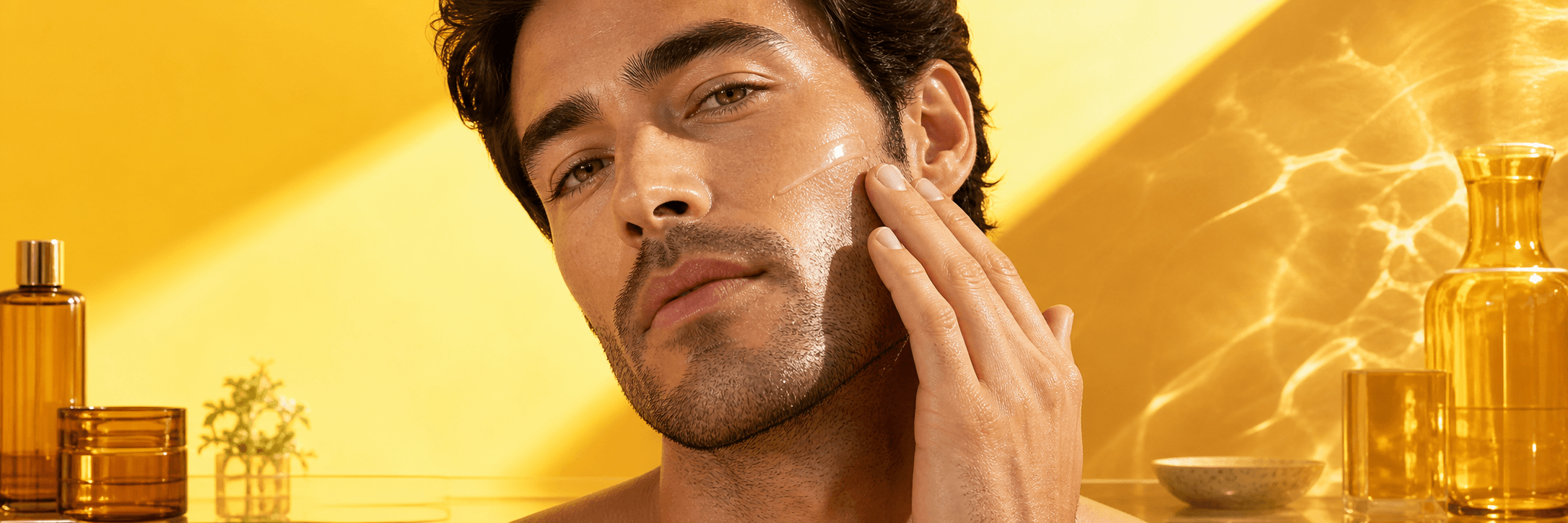
Eight hours of screen glare doesn't just tire your eyes — it changes how your face looks by 4pm. Skin under fluorescent office light and laptop glow reads duller and greasier faster than skin that spent the day outside, and an antioxidant gel is the step most men skip until someone on a video call asks if they're tired.
- Olirs' Ginkgo Defense Gel Booster is the antioxidant gel for screen time skin worth checking first — four named plant extracts, oil-free, €25.50.
- Double Hydration Boost Gel layers under it for skin that feels tight by lunch — multi-molecular hyaluronic acid, non-sticky. Buy.
- 3-in-1 Eye Cream for Men targets the tired-eye look screens cause specifically, not the whole face. Consider.
- Skip anything labeled just 'antioxidant complex' — you can't check the INCI on a vague phrase.
- COSMOS Natural certification means an outside auditor checked the formula in 2026, not a marketing team.
Why this matters
A desk job does specific, checkable things to skin: recycled office air pulls moisture out faster than outdoor air, screen glare pushes men to squint and rub their eyes more, and sitting under the same light for 8+ hours flattens out any natural glow by mid-afternoon. None of that is a diagnosis. It's just what a chair and a monitor do to a face over a workday.
An antioxidant gel like Ginkgo Defense Gel Booster doesn't reverse anything — no gel does, whatever the label says. What it can do is give skin a lightweight layer of named plant extracts that support how skin looks and feels through a long day at a screen, without adding the shine an oil would add under office lighting. That distinction matters more than most of the marketing around it lets on.
Who this antioxidant gel is actually for
This guide is for the man at a desk 6+ hours a day, most days, who's noticed his skin look duller by the afternoon or gets called "tired" more than he'd like on calls. It's not for someone chasing a dramatic before-and-after — appearance language only, because that's all any gel can honestly promise. If your main issue is active breakouts or a diagnosed skin condition, that's a dermatologist conversation, not a gel purchase.
What to look for in an antioxidant gel for screen time skin
Named antioxidants, not a complex
If the label says "antioxidant complex" with no ingredients listed, you can't check it. Look for ingredients you can actually name and look up — ginkgo biloba, green tea extract, grape seed extract, vitamin C. That's the whole point of reading a label instead of a claim.
Gel texture, not oil, for desk hours
Oils sit on top of skin and reflect light — on a webcam or under office fluorescents, that reads as shine, not glow. A gel absorbs faster and stays matte longer, which matters more at a desk than in a bathroom mirror.
A certification you can actually verify
COSMOS Natural means a third party audited every ingredient and how it was sourced. That's different from a brand simply calling itself "clean" — a word that means nothing on its own and should only ever describe a formula, never a person. Check the certification, don't take the word for it.
It has to survive a real morning
If a routine needs 10 minutes and 5 steps, it gets skipped by week two. A gel that layers in one motion under moisturiser, before you leave for work, is the one that actually gets used through 2026 and past it.
It admits what it won't do
No antioxidant gel treats, cures, or fixes anything — that's not how appearance products work, and any brand claiming otherwise is selling you a story, not a formula. The honest version says it helps skin look less dull, not that it reverses screen damage.
Top picks for screen time skin
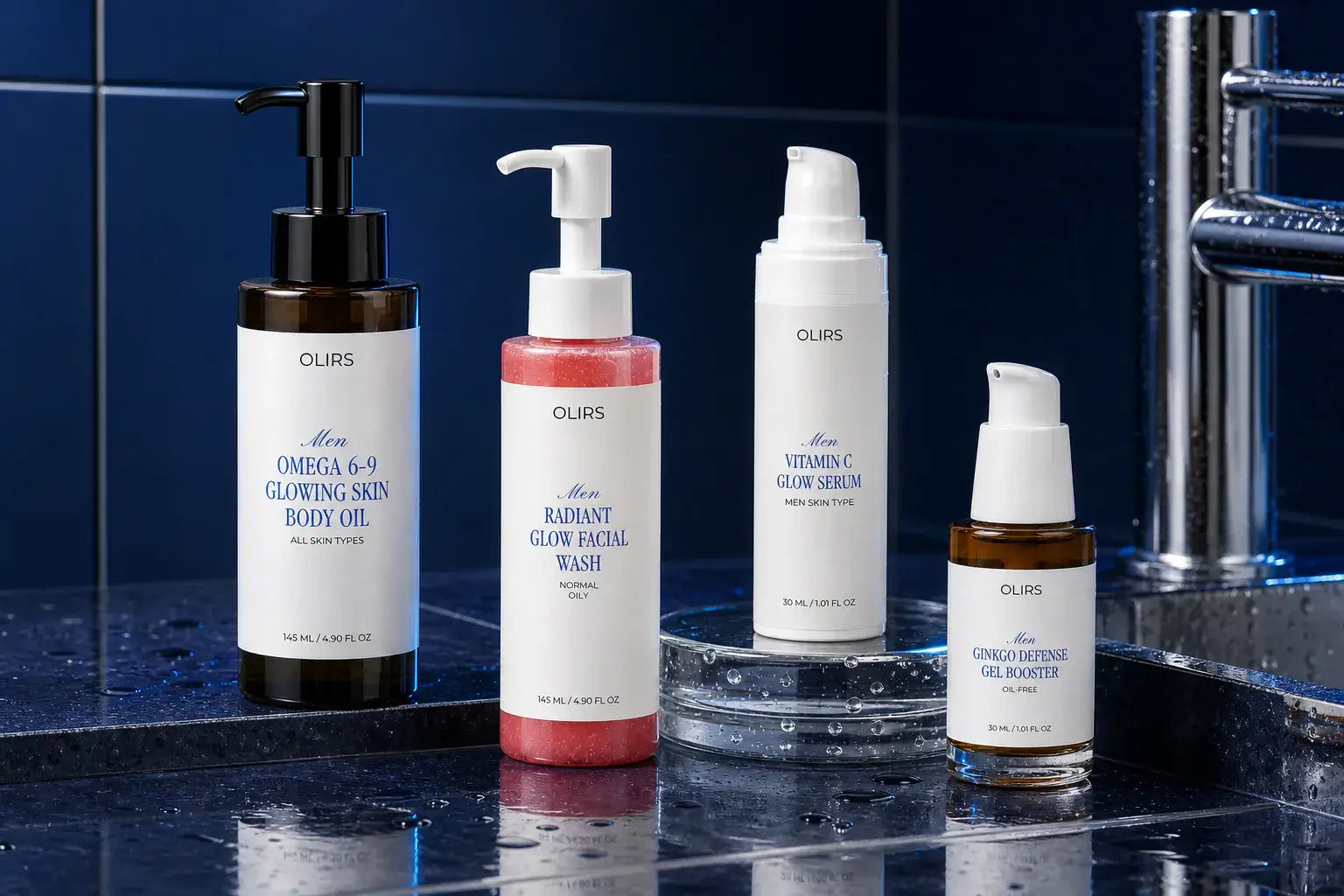
Ginkgo Defense Gel Booster — the label-reader's pick. Four named antioxidant plant extracts in one oil-free gel: ginkgo biloba, green tea, oak bark, and grape seed extract, priced at €25.50. It's built to sit under a moisturiser without adding weight or shine, which is the exact problem screen-heavy days create. Buy if you want antioxidant support you can actually check ingredient by ingredient.
Double Hydration Boost Gel — the hydration layer. Multi-molecular hyaluronic acid plus sodium PCA in a lightweight, non-sticky gel at €39.40. Screens and office air conditioning both pull moisture out of skin faster than most men notice, and this is the layer that answers that specifically. Buy if your skin feels tight by early afternoon, not just dull.
Vitamin C Serum — the brightening pick. Vitamin C works as an antioxidant through a different mechanism than ginkgo or green tea, and it's the one most associated with an even, less-dull look over time. Consider it if uneven tone bothers you more than midday shine — pairing it with a gel booster is layering, not choosing one over the other.
Oil-Free Zinc Face Gel for Men — the shine control pick. A simple, oil-free moisturiser built for men's skin, priced at €26. If your main complaint by 3pm is a shiny T-zone under office lighting, this solves a different problem than an antioxidant gel does. Consider for oily-leaning skin specifically.
3-in-1 Eye Cream for Men — the eye-strain pick. Screens strain the eyes before they strain anything else, and the skin around them often shows it first — puffiness, a tired look, fine lines from squinting at a monitor. Consider it if the eye area is your actual complaint, not the whole face.


What to avoid
- "Proprietary antioxidant complex" with no ingredients named. If you can't read it on the INCI, you can't verify it — and verification is the entire point of buying this way in 2026.
- Heavy facial oils as a first screen-time step. They read as shine under office lighting and on webcams, which is the opposite of what most desk workers actually want by mid-morning.
- Any product claiming to "reverse" or "repair" blue light damage. That's treat-and-fix language a gel can't back up. Look for appearance claims — "helps skin look less dull" — not cure claims.
Verdict comparison
| Product | Texture | Key actives (named) | Best for | Verdict |
|---|---|---|---|---|
| Ginkgo Defense Gel Booster | Oil-free gel | Ginkgo biloba, green tea, oak bark, grape seed | Antioxidant support, all-day wear | Buy |
| Double Hydration Boost Gel | Lightweight gel | Multi-molecular hyaluronic acid, sodium PCA | Tight-feeling skin by afternoon | Buy |
| Vitamin C Serum | Serum | Vitamin C | Dullness, uneven tone | Consider |
| Oil-Free Zinc Face Gel for Men | Gel moisturiser | Zinc, oil-free base | Midday shine | Consider |
| 3-in-1 Eye Cream for Men | Cream | Not published | Under-eye tiredness | Consider |
FAQ
What does an antioxidant gel actually do for screen time skin?
An antioxidant gel adds named plant extracts to skin's surface layer to support how it looks through a long day, not to reverse or repair anything. Ginkgo Defense Gel Booster does this with four named extracts in an oil-free base that won't add shine under office lighting.
Is antioxidant gel better than a vitamin C serum for desk workers?
Neither is strictly better — they work through different mechanisms and layer well together. A gel like Ginkgo Defense Gel Booster targets a lightweight, all-day antioxidant layer, while Vitamin C Serum leans toward brightening uneven tone.
How much does an antioxidant gel cost in 2026?
Olirs' Ginkgo Defense Gel Booster runs €25.50 in 2026, positioning it as a lower-cost layering step rather than a standalone routine. Price alone shouldn't decide it — check what's actually named on the label first.
Can an antioxidant gel replace SPF?
No. An antioxidant gel is not sunscreen and doesn't block UV rays the way SPF does. It's a layering step for appearance support, not a replacement for daily sun protection.
Should you use antioxidant gel morning or night?
Morning is the more common choice since it's meant to support skin through a day at a screen, applied before moisturiser. There's nothing stopping night use either — the ingredients don't require daylight to work.
Does blue light really affect skin the way UV does?
Screen light and UV light are not the same thing and shouldn't be treated as equivalent risks. The bigger day-to-day factors for desk workers are dehydration from indoor air and hours under the same artificial light, which is what an antioxidant gel is actually built to address.
What ingredients should you check on the label before buying?
Look for named antioxidants — ginkgo biloba, green tea extract, grape seed extract, vitamin C — rather than a vague 'antioxidant complex.' If you can't find specific ingredient names on the INCI, you can't verify what you're paying for.
Is COSMOS Natural the same as organic?
No, COSMOS Natural and COSMOS Organic are separate certifications with different standards. Olirs holds COSMOS Natural, which means a third party audited the ingredients and extraction methods, not the organic-specific criteria.
One last thing
Most men shopping for screen-time skincare assume the fix has to be a serum. It doesn't — texture matters as much as ingredients here. A gel reflects less light under a desk lamp or a laptop camera than an oil does at the same time of day, which is the entire reason Ginkgo Defense Gel Booster is built oil-free instead of oil-based. Read the ingredient list before the marketing copy, check the certification instead of trusting the claim, and build from there.